Spectroscopy of microscopic samples
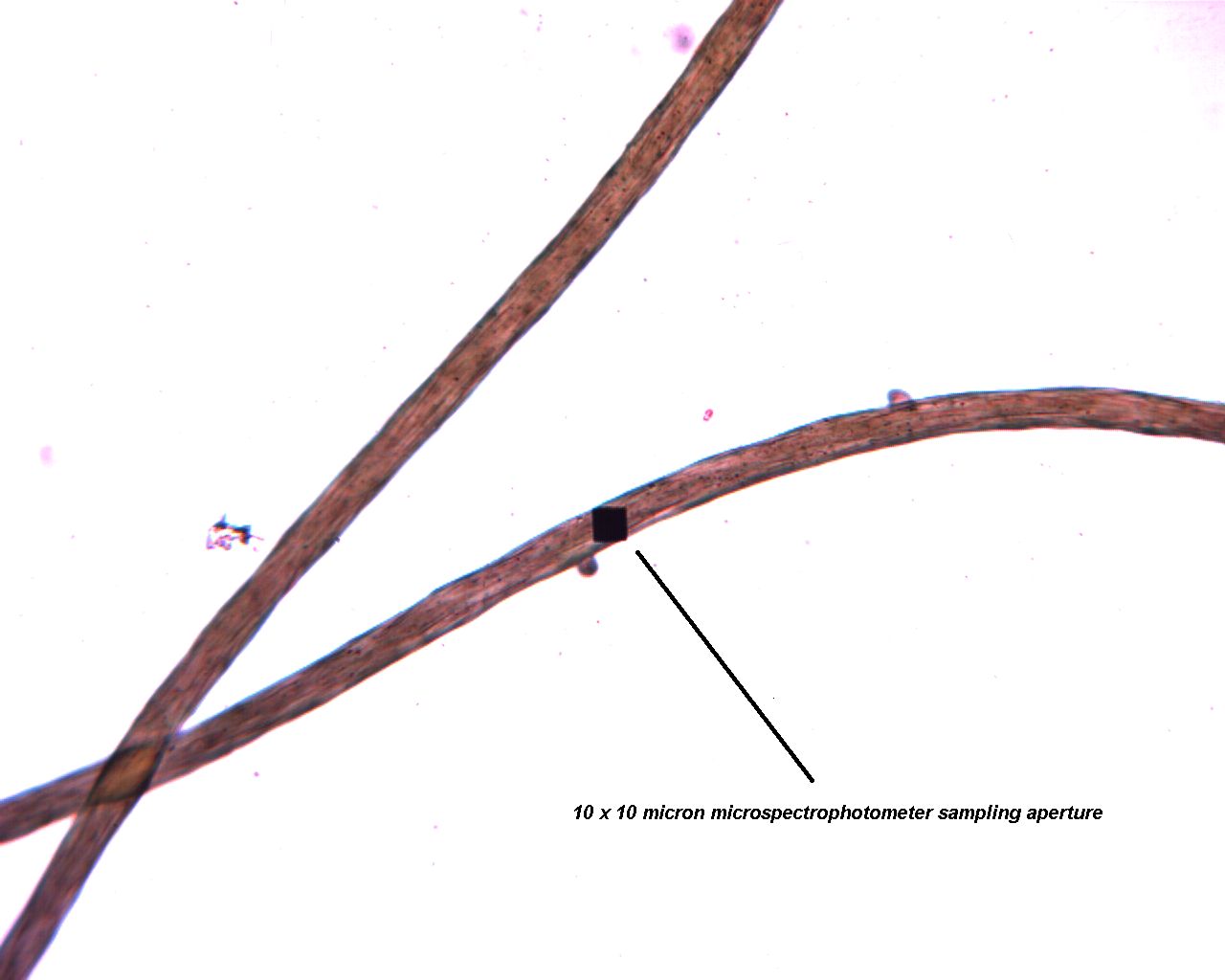
A microspectrophotometer is a cutting-edge scientific instrument designed to measure the spectra of microscopic samples. Imagine an engineer in a semiconductor facility using this tool to precisely measure the thickness of thin films, or a forensic scientist analyzing the dye in a single textile fiber. A chemist might employ it to examine the spectrum of nanocrystals while a biologist uses it to characterize single DNA crystals. CRAIC Technologies™ has innovatively combined a UV-visible-NIR optical microscope with a UV-visible-NIR range spectrophotometer to create a powerful microspectrophotometer. Unlike standard spectrophotometers, which measure samples roughly the size of 1 x 1 centimeters, this advanced instrument can analyze samples as small as 1 x 1 micrometers—much tinier than a human hair's thickness.
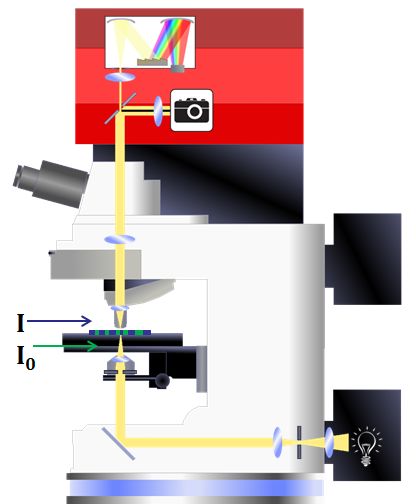
As depicted in the diagram, this sophisticated device integrates a UV-visible-NIR range optical microscope with a UV-visible-NIR range spectrophotometer. Configured for transmission microspectroscopy, it focuses light from the lamp housing onto the sample on the microscope stage (I0). The light transmitted through the sample is then collected by the objective (I) and directed onto the spectrophotometer entrance aperture.
The UV-visible-NIR microspectrophotometer is remarkably versatile, capable of measuring transmittance, absorbance, reflectance, polarization, Raman, fluorescence, and photoluminescence microspectra™ of areas smaller than a micron. It also excels in non-contact microspot thin film thickness measurement and colorimetry, making it indispensable across various research fields and industries.
Different types of microspectrophotometers cater to specific needs. Some are designed as add-ons for standard microscopes or probe stations, like the 508PV™ microscope spectrophotometer, while others are fully integrated, purpose-built instruments such as the 2030PV PRO™ microspectrophotometer. These advanced tools offer extended spectral ranges, superior results, and a host of features not achievable with add-on units as they integrate a custom designed UV-VIsible-NIR range microscope with specially designed Lightblades spectrophotometers into a single instrument that is optimized for microspectroscopy.
Why use a Microspectrophotometer?
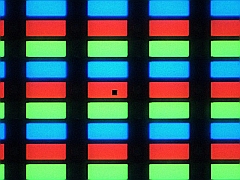 The microspectrophotometer revolutionizes scientific and engineering analysis by enabling the acquisition of spectra from extremely small sample areas non-destructively and without physical contact. This versatile tool can measure light transmitted through, reflected off, scattered from, or emitted by a sample. For instance, it can analyze OLED pixels, as shown in the adjacent image. The UV-visible-NIR range is particularly significant because many substances, even those that are colorless, absorb more in the UV spectrum than in the visible or infrared regions. Consequently, a UV microscope spectrometer proves invaluable for analyzing a wide array of samples across various applications.
Microspectrophotometers are widely utilized across numerous fields, from scientific research to industrial production. In manufacturing settings, they play a crucial role in quality control, whether it's ensuring the accuracy of color masks in flat panel displays or measuring film thickness on semiconductor integrated circuits. Analytical laboratories employ these instruments to identify and quantify microscopic samples in diverse scenarios. For example, forensic chemists match fibers or paints, geologists qualify gems or coal, process chemists determine the color of inks or paints, and conservators analyze and preserve great works of art. The microspectrophotometer's flexibility and broad range of applications make it an indispensable tool in both scientific and industrial environments.