
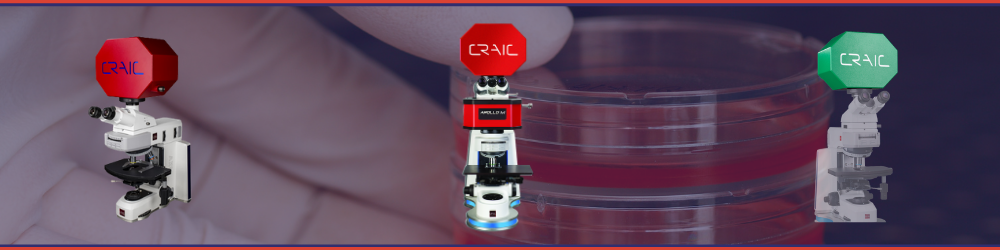
How to Protect Delicate Bio-Samples During Analysis Using SampleSafe™ Technology
A biological sample can change long before an experiment reaches its final measurement. Exposure to intense and high-energy illumination may alter proteins, damage living cells or reduce fluorescence, affecting both specimen integrity and analytical confidence. SampleSafe™ technology addresses such challenges by carefully managing illumination throughout microspectroscopy, enabling researchers to collect high-quality spectral data and images while preserving the sample’s integrity.
The Vulnerability of Bio-Samples under the Microscope
Every biological specimen responds differently to light, yet many share the same vulnerability when exposed to concentrated illumination. High-energy ultraviolet light and intense visible wavelengths can trigger photobleaching, permanently reducing fluorescence and altering molecular behavior. Heat generated during prolonged exposure adds another layer of stress by disrupting protein structures, affecting cellular components, or accelerating chemical changes that would not occur under normal laboratory conditions.
Consequently, sample degradation acts as more than just a preservation issue. Researchers may lose irreplaceable specimens, repeat time-consuming experiments, and question the reliability of spectral data collected from materials that no longer represent their native state. Even subtle changes can influence absorbance, reflectance, or fluorescence measurements, leading to inaccurate interpretations and conclusions.
Reliable experiments depend on maintaining specimen integrity from the first measurement to the last. Preserving biological samples is therefore an essential requirement for reproducible microspectroscopy and the production of peer-reviewed research that withstands scientific scrutiny.
Deep Dive: What is SampleSafe™ Technology?
SampleSafe™ technology is an intelligent illumination management system engineered to reduce unnecessary exposure across microspectroscopic analysis. Unlike passive optical filters that simply block selected wavelengths, the technology actively manages illumination to ensure biological specimens receive only the light required for each measurement.
Integrated within the Scorpii™ Advanced Illumination System, SampleSafe™ technology optimizes the illumination pathway by reducing exposure to damaging ultraviolet radiation. Researchers benefit from controlled illumination that supports accurate spectral acquisition and does not compromise delicate samples. The technology also helps generate consistent analytical conditions across repeated measurements, improving the quality of comparative studies and long-term research projects.
Key capabilities of SampleSafe™ technology include:
- Active mitigation of photobleaching during data collection
- Protection for temperature-sensitive biological materials and hazardous samples
- Automatic operation that fits naturally into existing laboratory workflows
- Consistent illumination management across demanding analytical applications.
How to Protect Delicate Bio-Samples with SampleSafe™ Technology
Minimizing damage to sensitive specimens requires careful control of exposure, wavelength selection, and illumination intensity during every stage of analysis. SampleSafe™ technology combines each of these elements to produce an effective preservation strategy.
First, intelligent exposure control limits the amount of time a specimen experiences high-energy illumination. Automated shuttering and illumination gating ensure light reaches the sample only in active spectral acquisition. Preparation, focusing, and instrument adjustments occur without unnecessary exposure, significantly reducing cumulative photobleaching and phototoxic effects.
Next, spectral tailoring configures the illumination system for specific analytical objectives. Smart bandpass selection removes unwanted ultraviolet wavelengths while illuminating the sample for visible and NIR microspectroscopy. For UV spectroscopy or imaging, the Scorpii™ system illuminates the sample for the minimum amount of time required for data collection. For example, laboratories performing protein absorbance measurements, fluorescence microscopy, or ultraviolet microspectral imaging can now have the illumination to match each analytical method and not expose specimens to excess energy.
Finally, software-driven intensity optimization adjusts illumination exposure to the lowest level capable of producing excellent signal-to-noise ratios for both spectroscopy and imaging. Eliminating excessive exposure to light lowers thermal stress and reduces the risk of photochemical damage, ensuring sensitive samples can remain stable in extended measurements and detailed spectral mapping experiments.
Together, these coordinated controls allow SampleSafe™ technology to preserve specimen integrity and avoid compromising analytical performance.
Real-World Laboratory Benefits
Accurate microspectral analysis relies on an unchanged specimen. When biological materials remain stable throughout testing, spectral curves accurately reflect their native chemical composition, improving measurement assurance.
Reliable data also simplifies comparisons between experiments and strengthens the validation of new analytical methods. Additionally, longer experimental protocols become more practical. Scientists can perform kinetic studies, high-resolution tissue mapping, repeated fluorescence measurements, and multi-point spectral imaging with significantly lower risk of sample deterioration interrupting data collection.
Moreover, laboratories benefit from the greater efficiency. Fewer damaged samples reduce repeat analyses, improve throughput, and strengthen reproducibility across research projects. Consistent data supports robust decision-making and enables research findings to withstand independent verification and publication requirements.
Advanced Microspectroscopy Equipment from CRAIC Technologies
SampleSafe™ technology demonstrates how intelligent illumination management can improve both specimen preservation and data reliability. Integrated within the Scorpii™ Advanced Illumination System and available across leading instruments from CRAIC Technologies, including the 2030PV PRO™ Microspectrometer, FLEX PRO™ Microspectrophotometer, and 508 PV™ Microscope Spectrometer, SampleSafe™ technology helps laboratories perform high-precision microspectroscopic measurements while preserving delicate samples. Find out more about our microspectroscopy solutions and SampleSafe™ technology by contacting our team to discuss your application or identify the right instrument for your laboratory.
References
- Andersson M, Andersson P O, Dahlberg T, et al. Laser induced degradation of bacterial spores during micro-Raman spectroscopy. Spectrochmica Acta Part A: Molecular and Biomolecular Spectroscopy. 2021;265(120381). doi:10.1016/j.saa2021.120381.
- Brookers S, Bitter J, Forster J, et al. Photofading in cotton fibers dyed using red, yellow, and blue direct dyes during examination with microspectrophotometry (MSP). Forensic Chemistry. 2017;5:72-78. doi:10.1016/j.forc.2017.06.002.
- Cooper J, Cusack M, Glidle A, et al. Effect of Laser Irradiation on Cell Function and Its Implications in Raman Spectroscopy. Applied and Environmental Microbiology Journal. 2018;84(8):e02508-e02517. doi:10.1128/AEM.02508-17.
