
Vitrinite Reflectance and Raman Microspectroscopy of Biochar
The properties that make biochar valuable for carbon dioxide removal, soil remediation, and advanced carbon materials originate at the microscopic level. Carbon ordering, thermal maturity, and structural heterogeneity all influence long-term stability. Vitrinite reflectance and Raman microspectroscopy provide complementary analytical information that allows researchers to characterize biochar more thoroughly than bulk chemical measurements alone.
The Science of Biochar Pyrolysis and Carbon Ordering
During pyrolysis, biomass is heated in an oxygen-depleted environment, causing complex organic compounds to decompose without combustion. Water, carbon dioxide, methane, and numerous volatile organic compounds are released as temperature increases, leaving behind a carbon-rich solid. The remaining carbon atoms gradually reorganize into interconnected aromatic structures that become increasingly ordered as thermal treatment progresses. Greater carbon ordering enhances resistance to biological and chemical degradation, making structural characterization crucial for evaluating long-term biochar stability. Biochar produced under insufficient thermal conditions may retain disordered carbon that decomposes more readily in the environment, reducing its value for carbon dioxide removal, soil remediation, and long-term carbon storage.
Vitrinite Reflectance as a Metric for Thermal Maturity
Originally developed for coal petrography, vitrinite reflectance measures the percentage of incident light reflected from polished organic matter to determine thermal maturity. Decades of research have demonstrated a reliable relationship between reflectivity and the temperatures experienced during carbonization. Applied to biochar, vitrinite reflectance offers a practical method for estimating the highest treatment temperature (HTT) experienced by individual particles.
When pyrolysis temperatures rise, reflectance increases in a highly predictable and monotonic manner, providing a direct indicator of thermal processing. Biochar production rarely generates perfectly uniform material. Feedstock composition, particle size, and kiln conditions can generate localized differences throughout a batch. Vitrinite reflectance identifies those inconsistencies by examining individual particles without relying on bulk measurements. Producers can therefore evaluate process consistency, verify thermal treatment, and refine operating conditions to produce biochar with improved structural stability.
Raman Microspectroscopy Deciphers the Carbon Lattice
Evaluating thermal maturity alone does not fully characterize biochar. Carbon structure also determines long-term stability, requiring techniques capable of characterizing the arrangement of carbon atoms within the biochar matrix. Raman microspectroscopy is a non-destructive optical technique that measures molecular vibrations generated when laser light interacts with carbonaceous materials. The resulting spectrum establishes a detailed chemical fingerprint that reflects structural changes that occur during pyrolysis.
Among the most important spectral features are the G-band and the D-band. The G-band represents highly ordered graphitic carbon, indicating the presence of well-developed aromatic carbon networks. Conversely, the D-band reflects structural disorder, lattice defects, and amorphous carbon domains that remain after thermal treatment.
Calculating the ID/IG ratio tracks the structural evolution of ordered and disordered carbon structures. Since progressive carbonization changes the relative intensity of the D and G bands in a highly predictable manner, the ratio serves as an indicator of long-term chemical stability.
Raman microspectroscopy also enables scientists to monitor how raw biomass feedstocks transform into condensed polycyclic aromatic carbon structures throughout pyrolysis. With no chemical digestion or destructive sample preparation needed for Raman microspectroscopy, identical microscopic regions can be analyzed without altering the specimen.
Its analytical strengths include:
- Direct molecular evidence of aromatic carbon formation
- Quantitative assessment of structural ordering and defect density
- Non-destructive characterization at the micron scale
- Reliable comparison of carbon structures produced under different pyrolysis conditions.
Correlative Microscopic Characterization of Biochar
Neither vitrinite reflectance or Raman microspectroscopy delivers a complete characterization of biochar. Vitrinite reflectance establishes the thermal history experienced by a biochar particle, whereas Raman microspectroscopy reveals the molecular organization generated during the heating process. Accurate correlation depends on collecting both measurements from the same micron-scale location. Examining identical regions eliminates uncertainty introduced by sample heterogeneity and reveals the relationship between thermal maturity and carbon structure.
Why Optical Metrics Are Important for Biochar Quality and Valuation
Reliable optical characterization connects laboratory measurements directly to real-world performance. Biochar exhibiting high vitrinite reflectance alongside a favorable ID/IG ratio demonstrates that pyrolysis has produced a stable aromatic carbon framework capable of persisting in soil for centuries rather than rapidly returning carbon to the atmosphere.
Verification has also become increasingly useful to carbon dioxide removal markets. Carbon credit programs require defensible evidence that stored carbon will remain stable over extended periods. Vitrinite reflectance and Raman microspectroscopy provide standardized, repeatable measurements that support permanence assessments and strengthen the credibility of carbon accounting.
Manufacturers also benefit from continuous analytical feedback. Monitoring microscopic changes across production batches helps operators optimize residence time, heating temperature, and feedstock selection to maximize carbon fixation without unnecessary energy consumption. These process improvements support consistent product quality across agricultural soil amendments, mine land restoration projects, contaminated site remediation, and engineered carbon materials.
Refining Biochar Analysis With Vitrinite Reflectance and Raman Microspectroscopy
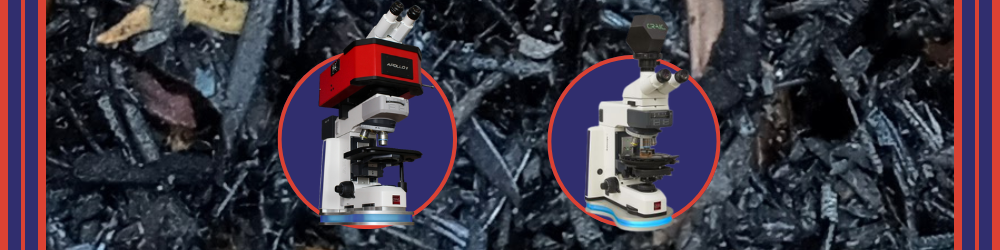
CRAIC Technologies offers advanced optical instrumentation that delivers comprehensive biochar characterization. GeoImage™ produces rapid, automated vitrinite reflectance measurements and maceral analysis, and the Apollo M™ Raman Microspectrometer performs easy-to-use, non-destructive chemical fingerprinting from the same microscopic region. Together, they enable complete correlative characterization to verify biochar quality, optimize pyrolysis processes, and support carbon credit validation. Contact our team today to learn more about how our technology can advance your biochar analysis workflow.
References
- Lindhardt J, Lukasik N, Malachowska A, et al. Assessing CO2 storage in Danish biochars using inertinite benchmarking. Biomass and Bioenergy. 2026;212(109179). doi:10.1016/j.biombioe.2026.109179.
- Chen J, Cheng C, Hu H, et al. Using the Conditional Process Analysis Model to Characterize the Evolution of Carbon Structure in Taxodium ascendens Biochar with Varied Pyrolysis Temperature and Holding Time. Plants. 2024;13(3):460. doi:10.3390/plants13030460.
